

 English
 Español
 عربى
عربىWhen a control cabinet leaves the factory, its wiring system may look complete, but the real test begins when technicians need to diagnose a fault, replace a component or add another circuit. Poorly organized connections can turn a simple service task into a time-consuming search through wires and labels. For machine builders and industrial procurement teams, Terminal Blocks can provide more than basic electrical connections. When combined with clear identification, modular accessories and a logical wiring layout, they can create a more serviceable interface between field wiring and the equipment inside the cabinet.
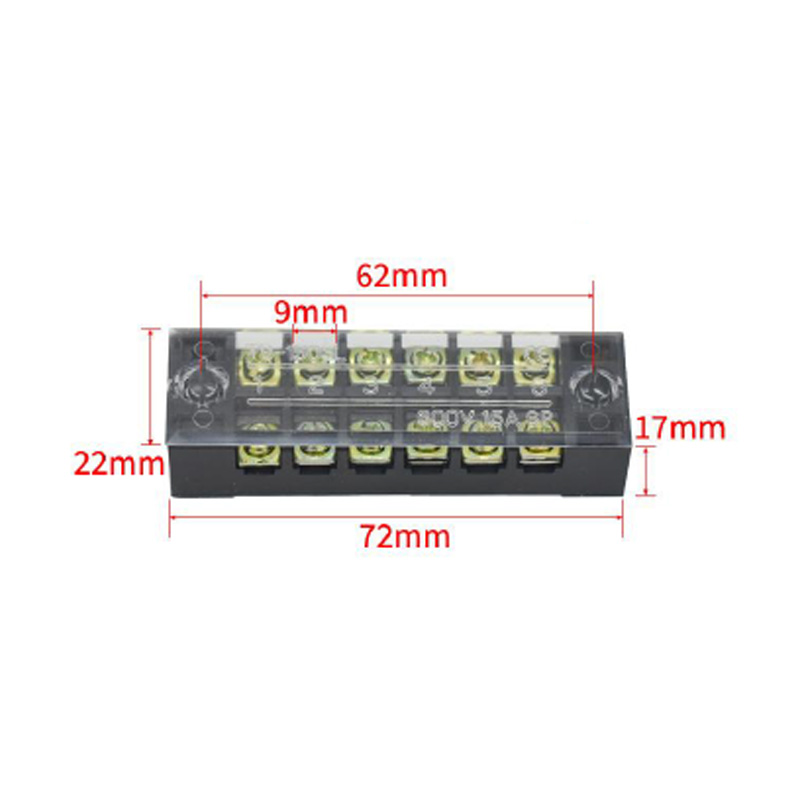
Make Troubleshooting Easier to Follow
A well-planned terminal row gives technicians a defined point where circuits can be identified, tested and separated. Instead of tracing an entire cable through a crowded cabinet, a technician can begin at the designated connection point and follow the circuit according to the wiring documentation.
This is especially useful when a machine contains sensors, actuators, motors and control signals that enter the cabinet from different locations.
For equipment manufacturers, designing the terminal arrangement around the wiring diagram can make commissioning and future troubleshooting more straightforward.
Use Identification as Part of the Wiring Design
Terminal blocks are easier to service when each circuit has a clear identification method. Markers, labels and consistent numbering help technicians understand which terminal corresponds to a particular device or circuit.
The labeling system should be planned before assembly rather than added as an afterthought. Consistent identification can support several activities:
Initial cabinet inspection
Electrical testing
Fault diagnosis
Component replacement
Future wiring modifications
For international equipment suppliers, clear labeling is also valuable when machines are serviced by technicians who were not involved in the original panel assembly.
Leave Room for Future Changes
Industrial equipment rarely remains completely unchanged throughout its service life. Customers may add sensors, modify control functions or replace components with updated versions.
A modular terminal arrangement can make these changes easier to manage. DIN-rail mounting allows terminal rows to be organized into functional groups, while accessories such as end stops, separators and jumpers can support different circuit arrangements.
Recent control-panel guidance also emphasizes designing terminal layouts with future modifications and service access in mind rather than focusing only on the initial wiring task.
Choose the Right Functional Terminal
A terminal row does not have to contain only standard feed-through blocks. Different circuit requirements may call for different terminal functions.
Depending on the application, engineers may consider:
Feed-through terminals for standard connections
Ground terminals for protective earth wiring
Fuse terminals for circuit protection
Disconnect terminals for isolation
Test terminals for measurement and commissioning
Multi-level terminals where cabinet space is limited
Using the appropriate terminal function can make a wiring system easier to understand and maintain instead of forcing every circuit into the same configuration.
Optimize Limited Cabinet Space
Control cabinets increasingly need to accommodate more functions without becoming unnecessarily large. Terminal selection can influence how efficiently available DIN-rail space is used.
Multi-level and compact terminal designs can help organize multiple connections within a limited area, while suitable grouping can keep power, control and signal circuits easier to identify.
However, compactness should not come at the expense of access. Engineers should consider wire routing, marking visibility, tool clearance and the space required for future service before finalizing the terminal layout.
Make Testing Part of the Design
Troubleshooting is easier when technicians can access circuits without dismantling unrelated wiring. Terminal accessories and test-oriented designs can provide defined points for electrical measurements during commissioning or maintenance.
This can be particularly useful for control circuits and field signals where technicians need to verify whether a problem originates from the field device, wiring or control equipment.
A terminal system designed with testing in mind can therefore support the complete equipment lifecycle rather than serving only as an assembly component.
Consider Pluggable Connections for Serviceable Equipment
For modular machines or equipment that may require frequent component replacement, pluggable terminal systems can offer another approach to maintenance. Prewired sections can be disconnected and reconnected without rebuilding the entire wiring arrangement.
This can be useful when control modules or functional assemblies need to be replaced as complete units. The suitability of a pluggable design still depends on the electrical requirements and mechanical conditions of the application.
For manufacturers building equipment with planned service procedures, this option can be evaluated during the initial electrical architecture stage.
Design the Terminal System for the Full Equipment Lifecycle
A terminal block should not be viewed as an isolated wiring accessory. Its value becomes clearer during commissioning, troubleshooting, modification and long-term maintenance.
For overseas equipment manufacturers and procurement teams, selecting Terminal Blocks based on functional requirements, identification, testing, cabinet density and future service needs can create a more organized electrical architecture. By developing the terminal system together with the control cabinet layout, manufacturers can make wiring easier to understand today while leaving technicians a clearer path for maintenance and future modifications.