

 English
 Español
 عربى
عربىAs industrial equipment becomes more compact while incorporating more sensors, controllers and communication functions, control cabinet designers face a familiar challenge: fitting more wiring into limited space without making installation and maintenance unnecessarily difficult. This has increased interest in high-density, multi-level and modular wiring solutions. For equipment manufacturers and procurement teams, Terminal Blocks can play an important role in balancing cabinet size, wiring organization and service access. The objective is not simply to fit more connections into a smaller area, but to create a wiring structure that remains practical throughout the equipment lifecycle.
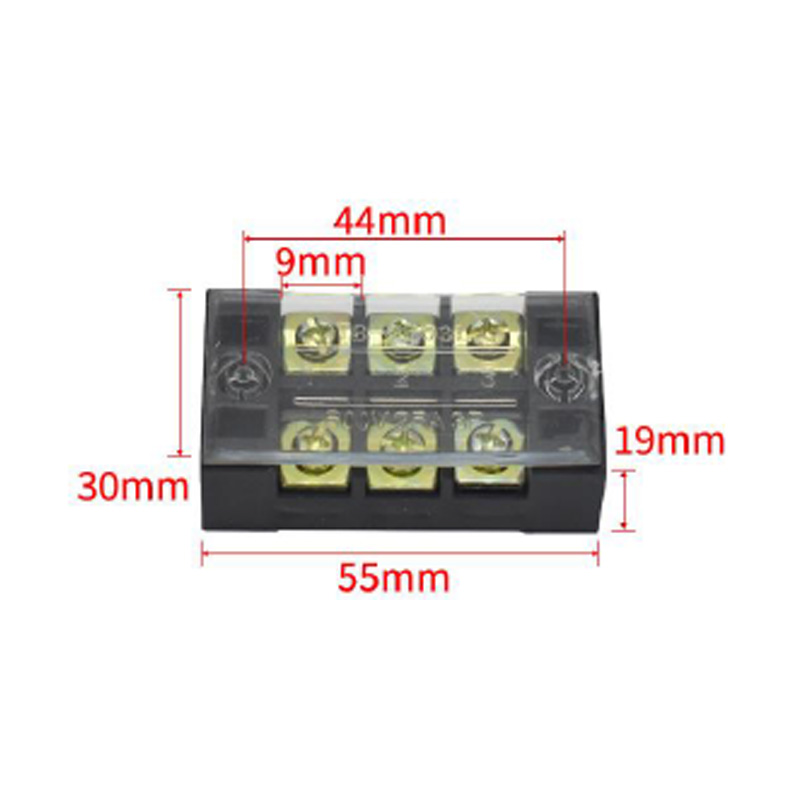
Cabinet Density Is Becoming a Design Issue
Modern automation cabinets may contain PLCs, relays, power supplies, drives, sensors and communication equipment within the same enclosure. As the number of circuits increases, conventional single-level terminal arrangements can consume a significant amount of DIN-rail space.
Industry design discussions increasingly highlight compact and integrated terminal solutions as a response to shrinking control-panel footprints.
For engineers, this means terminal selection should be considered during cabinet layout rather than after the major components have already been positioned.
Multi-Level Designs Create Vertical Space
When horizontal DIN-rail space is limited, multi-level terminal blocks can provide another way to organize circuits. Instead of placing every connection beside the next one, multiple connection levels are arranged vertically within a compact profile.
This approach can be useful for:
PLC I/O wiring
Sensor and actuator circuits
Control signals
Building automation
Machine control panels
The exact configuration should still be matched to conductor size, electrical ratings and maintenance requirements. Saving rail space should never make individual connections difficult to identify or service.
High Density Needs Clear Organization
A compact terminal row can become difficult to work with if circuits are not clearly separated. Higher wiring density makes identification and grouping more important, not less.
Engineers can organize terminals according to circuit function, equipment section or field device. Markers, separators and end stops can then support a more structured layout.
This approach gives technicians a clearer visual path when tracing circuits and reduces the chance of disturbing unrelated connections during maintenance.
Accessories Complete the Terminal System
A terminal block should not be evaluated as an isolated component. The surrounding accessories can determine how effectively the complete system uses available cabinet space.
Depending on the design, engineers may need:
End stops
End plates
Partition plates
Jumpers
Marking systems
Test accessories
Mounting accessories
A coordinated accessory range can simplify cabinet design because engineers can build different terminal arrangements from compatible components rather than creating a separate solution for every circuit.
Compact Does Not Mean Hard to Maintain
One common concern with high-density wiring is whether technicians will still have enough room to inspect or modify individual connections.
The solution is to optimize density without eliminating practical access. Wire-entry direction, terminal spacing, marking visibility and screwdriver clearance should be reviewed during layout development.
For maintenance-oriented equipment, a slightly different terminal arrangement may be more valuable than simply choosing the smallest available component. A well-organized cabinet can reduce service complexity even when the overall wiring density is relatively high.
Modular Layouts Support Future Expansion
Industrial equipment often changes after installation. Additional sensors may be added, control functions may be modified or a machine may be adapted for a different production process.
Modular terminal systems can make these changes easier because individual blocks can be arranged, separated or expanded along the DIN rail. Recent industry developments also emphasize modularity and flexibility as important characteristics for modern control cabinets.
For OEM manufacturers, leaving a logical expansion area during the original cabinet design can be more practical than redesigning the entire terminal row later.
Consider Heat and Circuit Separation
Increasing wiring density also requires engineers to consider how different circuits are arranged inside the cabinet. Power circuits, control wiring and sensitive signals may have different layout requirements.
Terminal placement should therefore be coordinated with the wider cabinet design, including heat-generating components, cable routing and circuit separation.
A compact terminal solution is useful only when it supports the overall electrical architecture rather than creating new layout problems elsewhere in the enclosure.
Select Density According to the Application
There is no single terminal configuration that suits every compact cabinet. A PLC control panel may benefit from multi-level signal terminals, while a power distribution section may require larger terminals with greater conductor capacity and more working clearance.
For overseas buyers, the better approach is to define the cabinet's wiring density, conductor requirements, circuit functions and maintenance expectations before selecting the terminal format.
A capable Terminal Blocks manufacturer can then help engineers compare standard, compact and multi-level configurations according to the actual application. By treating terminal selection as part of the cabinet architecture, manufacturers can use available space more efficiently while maintaining organized wiring, accessible service points and room for future equipment development.